
Food scraps are one of the heaviest parts of a commercial waste stream, and across Atlanta more restaurants, schools, offices, and venues are pulling them out of the landfill. Here's the 2026 news driving that shift and the practical questions to answer before you start.
Atlanta composting news in 2026
Atlanta's venues are setting the bar
During Atlanta's first-ever Climate Week in October 2026, Mercedes-Benz Stadium drew attention for its zero-waste program, with composting stations on every concourse and more than 90% of on-site waste diverted from landfill.
Source: downtownATLSchools and campuses are investing in food waste
Georgia Tech earned a national APPA Sustainability Innovation Award in 2026 for its in-vessel composting program, and in November 2026 posted a request for proposals for campus-wide compost collection — a sign that institutions want reliable hauling partners.
Source: Georgia Tech News CenterMetro cities are expanding organics programs
In April 2026, Decatur moved its grant-funded curbside organics pilot into a full program with a private composter, part of what industry leaders describe as growing momentum for municipal composting in Georgia.
Source: Waste DiveWhat people are searching for
U.S. search data shows organizations mostly want to understand the basics — what counts as compostable and how the process works. Approximate monthly searches:
- "what does commercially compostable mean"~390/mo
- "commercial composting"~480/mo
- "composting facility / compost facility near me"~590/mo each
- "bpi certified"~720/mo
- "industrial composting"~390/mo
- "what is commercial composting"~110/mo
What "commercially compostable" really means
The most-searched question is about labels. "Commercially compostable" products break down at a commercial composting facility — not in a backyard pile. Certification marks like BPI help you spot products that meet compostability standards. Before switching your packaging, ask your hauler which certified items they accept so they don't become contamination.
Who benefits most from commercial composting
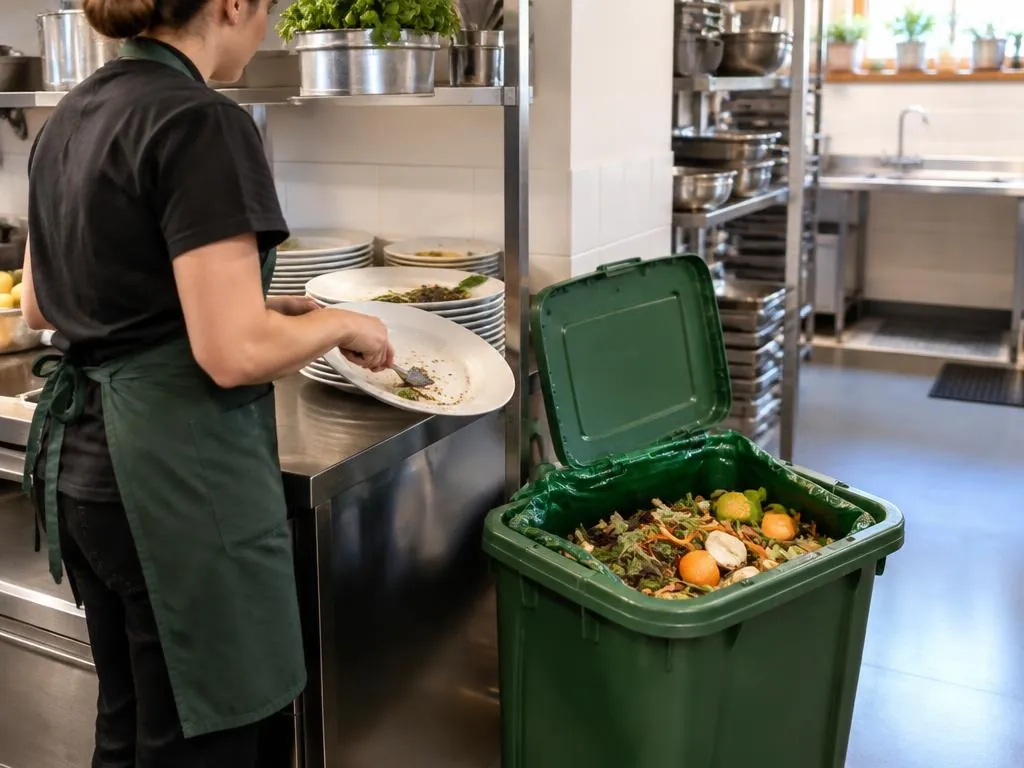
Restaurants, cafes & grocers
Prep scraps, plate waste, and expired produce add up fast. Back-of-house bins and frequent pickup keep odors under control.
Schools & universities
Cafeterias create predictable daily volume and are a natural place to teach students about waste.
Offices & property managers
Breakroom and café composting supports tenant sustainability goals and building certifications.
Nonprofits, churches & event venues
Community meals and events produce spikes of food waste that a scheduled or on-call pickup can handle.
How to start a food composting program
- Do a one-week waste check: weigh or count bags of food scraps from kitchens, cafeterias, and breakrooms
- Pick collection points — back-of-house prep, dish return, cafeteria lines, and breakrooms
- Size bins and set a pickup schedule that matches your volume (daily to weekly)
- Choose certified compostable packaging if you serve takeout or cafeteria meals
- Train staff or students with simple signage: food scraps in, plastic and wrappers out
- Track diversion numbers for ESG reports, grant applications, or sustainability goals
How EcoClear handles commercial composting
EcoClear collects food scraps on-site from restaurants, cafes, grocers, offices, and other organizations across metro Atlanta. Commercial accounts get daily to weekly pickup, bin sizing and staff training, diversion reports for ESG goals, and volume-based pricing. We accept meat, dairy, and paper, and you can add junk removal, recycling, or dumpsters to the same account. See our Atlanta food composting service for details.
Ready to start composting at your organization?
Tell us your location, rough food waste volume, and preferred pickup schedule — we'll size the program for you.
Frequently Asked Questions
What is commercial composting?+
Commercial (or industrial) composting is large-scale processing of food scraps and approved compostable materials at a dedicated facility. Higher, controlled temperatures break down material that a backyard pile can't handle, such as meat, dairy, and bones.
What does "commercially compostable" mean?+
It means a product — a cup, utensil, or container — is designed to break down at a commercial composting facility, not in a backyard bin. Look for third-party certification such as BPI, and confirm with your hauler which certified products they accept.
How does commercial composting work for a business or school?+
Your hauler sizes and delivers sealed bins, staff or students sort food scraps into them, and the hauler collects on a set schedule — anywhere from daily to weekly — and takes the material to be processed into finished compost.
Can restaurants and cafeterias compost meat and dairy?+
Yes. Because commercial composting runs hotter than home composting, food scraps including meat, dairy, and bones are commonly accepted. EcoClear accepts meat, dairy, and paper.
How much does commercial food composting cost in Atlanta?+
Commercial pricing is usually based on volume and pickup frequency. EcoClear prices commercial composting by volume — share your location, estimated food waste, and preferred schedule for a quote.
Managing several sites or a campus? Review our Commercial Solutions or contact EcoClear Hauling.